

KAMPALA, UGANDA: 02 October 2026— dfcu Bank has proposed the establishment of a dedicated mining risk-sharing framework to unlock vital commercial financing for Uganda’s expanding minerals sector. The financial institution emphasizes that robust risk mitigation mechanisms are critical to attracting long-term capital and driving industry development.

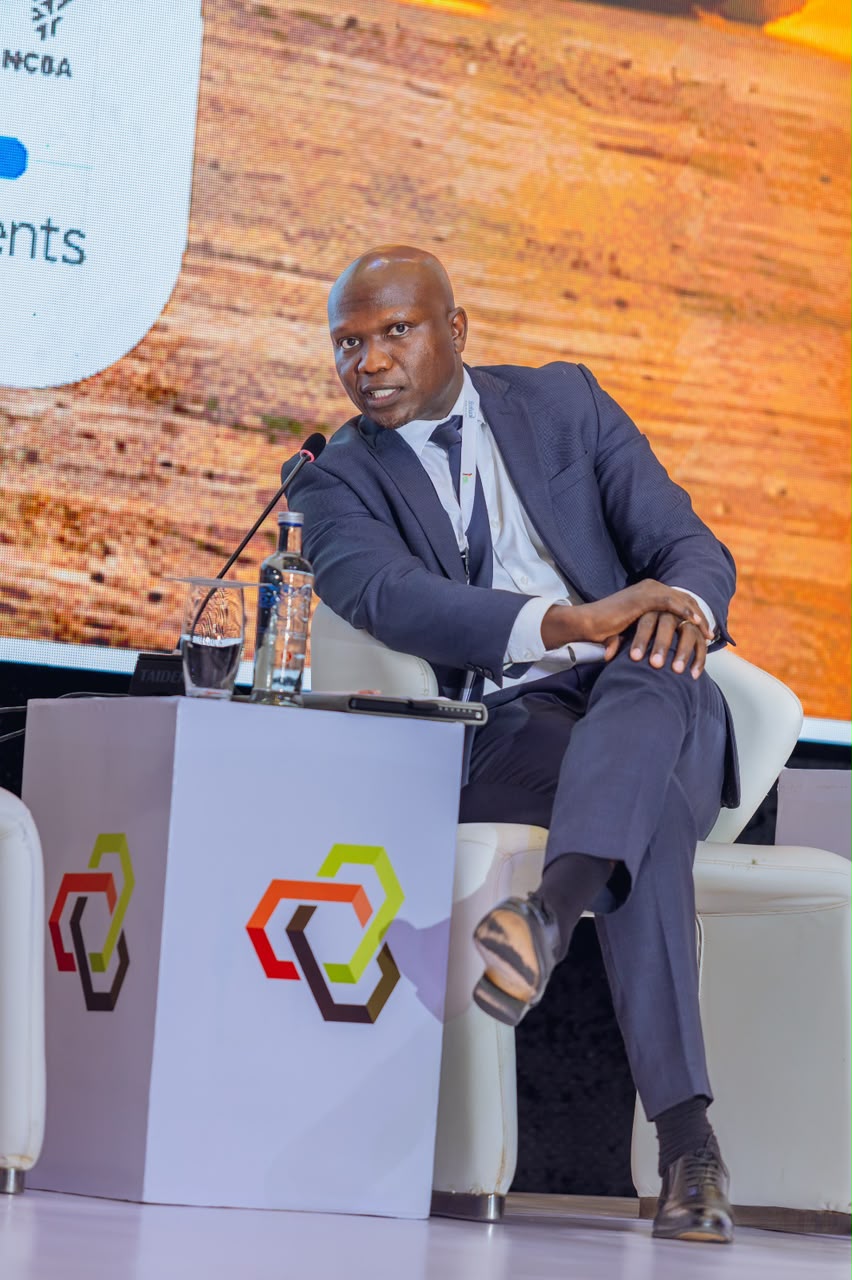
The proposal was presented by Moses Malinga, dfcu Bank’s Sector Head for Infrastructure and Energy, during a panel discussion titled “De-risking the Mine” at the 15th Annual Mineral Wealth Conference and Expo held at Speke Resort Munyonyo.
According to Malinga, creating a centralized mining risk pool would enable financial institutions, insurers, and industry stakeholders to collectively absorb and manage unique sector risks, thereby bolstering bankability from initial exploration through to full production.
Drawing direct lessons from the structural framework developed for Uganda’s oil and gas industry, Malinga argued that the mining sector could benefit significantly from a consortium model that spreads capital exposure among multiple market actors.
”Mining projects carry different risks at every stage of development, from exploration to production. Financial institutions must understand and appropriately mitigate these risks before deploying capital,” Malinga said.
He noted that insurance should function beyond basic protection for lenders, serving instead as a shared risk-management mechanism that safeguards both developers and financiers while fostering confidence across the domestic investment ecosystem.
To support this model, Malinga called for expanding Uganda’s local reinsurance capacity. Strengthening local balance sheets, he argued, would allow domestic insurers to retain higher levels of risk and reduce reliance on foreign markets for standard exposures.
With global investor interest in Uganda’s mineral potential rising, Malinga underscored that access to capital remains a pivotal determinant in converting untapped resource deposits into commercially viable operations. He reiterated dfcu Bank’s commitment to supporting the sector through tailored value-chain financial products, including asset financing, performance guarantees, transactional banking, and payment solutions.
Closing the GDP Gap
The two-day conference, organized under the theme “Beneath the Surface: Unlocking Africa’s Next Mining Powerhouse,” gathered 1,112 delegates from 30 countries—including government officials, mining executives, financiers, insurers, and development partners—to address key operational and funding challenges.
Addressing delegates at the summit, State Minister for Minerals Phiona Nyamutoro underscored the imperative of scaling up the sector’s macroeconomic output.
”The sector currently contributes about 2.2% of GDP, yet our National Development Plan IV targets 7.9% by 2029. This is a significant gap that we must work together to close,” Nyamutoro said.
She added that outcomes from conference deliberations—spanning licensing, project finance, formalization of artisanal mining, local processing, geological mapping, and capacity building—will inform policy actions aimed at accelerating sector output.
Addressing state participation, Maria Kiwanuka, Chairperson of the Uganda National Mining Company, called for clear, predictable operational rules regarding state equity, capital contributions, shareholder rights, and regulatory procedures.
Kiwanuka stressed that clear parameters provide institutional investors with certainty when evaluating long-term capital commitments, ensuring a balance between investor confidence and the protection of national interests. She also reiterated the need to prioritize local mineral processing, refining, and downstream industrial integration over the direct export of raw mineral resources.