


KAMPALA, Uganda: 20 November 2026— Alcohol consumption is killing 17,065 Ugandans and draining Shs11 trillion from the national economy every year, according to new research released on Friday ahead of next week’s national alcohol policy summit.

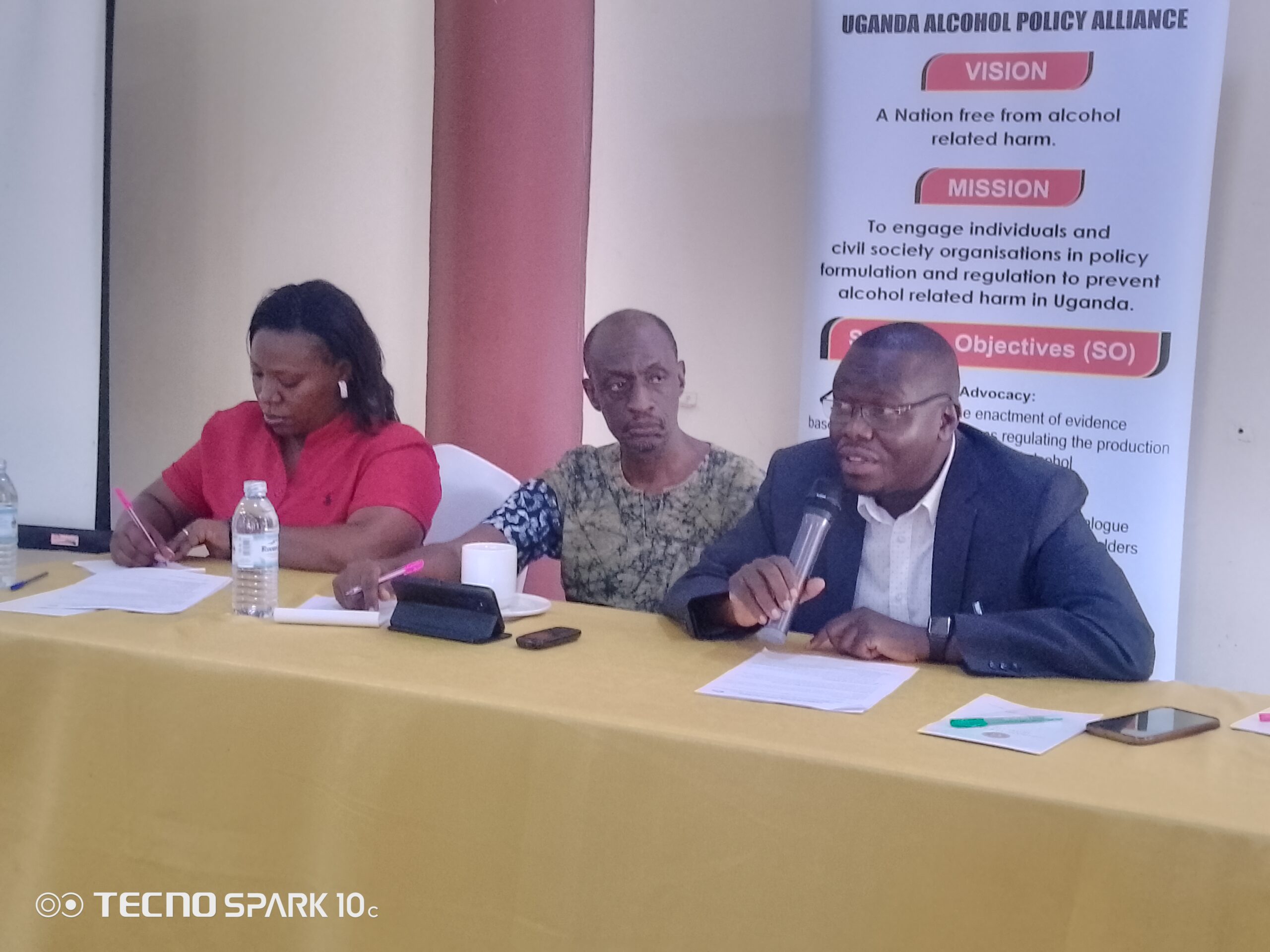
Presenting highlights from the Uganda Alcohol Status Report during a press briefing at Grand Global in Kampala, a team of public health experts commissioned by the Uganda Alcohol Policy Alliance (UAPA) warned that unchecked drinking is eroding household wealth and overwhelming public health facilities.
The study—led by Lead Consultant Francis Nsanga alongside Co-investigator Dr. David Kalema, Prof. Nazarius Mbona Tumwesigye, Dr. Aloysius Rukundo, Dr. Alfred Jatho, and Daniel Ssekabojja—reviewed 10 years of national and international data from the World Health Organization (WHO), the Uganda Demographic Health Survey, academia, and civil society.
Heavy Toll on Lives and Livelihoods
According to the findings, the 17,065 alcohol-attributable deaths recorded annually represent 7.5 percent of all national deaths, claiming the lives of 13,684 men (10.6 percent) and 3,382 women (3.4 percent).
Beyond the loss of life, 12.4 percent of Ugandans aged 15 and older suffer from Alcohol Use Disorder—significantly higher than both the global average of 7.0 percent and the African regional rate of 6.3 percent.
”You cannot build household wealth when addiction is emptying the household pocket, destabilizing homes, and mounting more pressure on the already overstretched health system,” UAPA Executive Board Chairperson Richard Baguma stated.
Top Consumer in Africa
The report ranks Uganda first in Africa and fifth globally in alcohol consumption, with citizens consuming an average of 12.2 litres of pure alcohol per person each year. Overall, 42.6 percent of Ugandans aged 15 and above drink alcohol, and more than half (54.5 percent) are heavy drinkers.
While overall consumption is higher among men (46.1 percent) than women (15.3 percent), researchers flagged rising binge drinking among school-going teenagers, as well as surging consumption among women in the Karamoja and West Nile regions. High prevalence rates were also documented in fishing communities (48.5 percent) and among persons living with HIV/AIDS (33 to 50 percent).
Researchers noted that key drivers of consumption include being male, low socioeconomic status, lower education levels, and rural residence.
Legal Gaps and Call to Action
Experts blamed the escalating crisis on aggressive marketing targeting young people and women, alongside “sloppy action” on enforcement. Despite existing provisions under the Roads and Traffic Act, Kawunyemu drink-driving operations, and periodic tax increases, Uganda still lacks an overarching national alcohol law, and only 14.6 percent of districts have enacted local alcohol regulations. As a result, cheap informal alcohol—ranging from local brews to uninspected alcoholic “kombucha” drinks—remains widely accessible.
Rejecting arguments that regulation hurts business, UAPA emphasized that strict alcohol control protects the economy by keeping breadwinners healthy and productive, while urging leaders to insulate alcohol policy from industry interference. Families were also urged to end stigma by helping struggling relatives seek confidential support at hospitals or psychiatric facilities rather than hiding them away.
The full Uganda Alcohol Status Report will be officially launched next week at the 5th Uganda Alcohol Policy Conference (UAPC 5), scheduled for November 25–26, 2026, at Makerere University, where advocates, health experts, and leaders will gather to push for lasting solutions.