
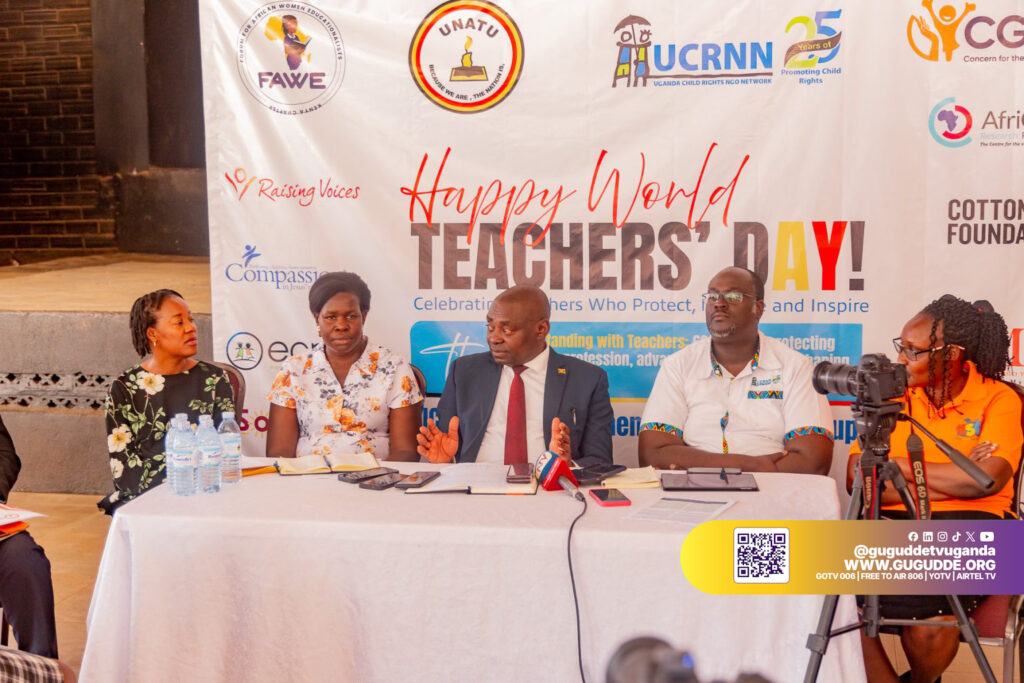
KAMPALA, Uganda: 05 October 2026— The Uganda National Teachers’ Union (UNATU) has issued a sweeping national statement calling for an immediate overhaul of how the country treats, remunerates, and protects its educators.
Released under the national theme “Celebrating Teachers – Creating Lasting Value,” the joint statement signed by UNATU National Chairperson Tumuhimbise Zadock and General Secretary Baguma Filbert Bates presents a stark assessment of the modern teaching profession in Uganda.
To mark World Teachers’ Day 2026, UNATU conducted a 24-hour national online survey asking educators to share the single most important reality they wished the public understood.
The responses from more than 200 teachers revealed widespread emotional fatigue, financial strain, and frustration with public perception:
“Teachers are human beings too. We have feelings, families, financial challenges, and personal struggles. Yet we still come to school every day to give our best and shape the future of children,” wrote one respondent.
“When I am not happy, the world is not happy,” another teacher noted, emphasizing the direct connection between educator well-being and education quality.
UNATU stressed that teachers are increasingly forced to serve as social workers, counselors, financial administrators, and mentors in overcrowded classrooms with minimal resources—all while coping with high living costs and inadequate pay.
Addressing recent policy directives and government focus on science and technical training, UNATU warned against dividing the education workforce or creating hierarchies among educators.
Unified Profession: The union insisted that while strengthening Science, Technology, Engineering, and Mathematics (STEM) and Technical and Vocational Education and Training (TVET) is important, it must not lead to the devaluation of Arts, Humanities, primary education, or foundational learning.
Gender Equity: Noting that women make up a significant portion of Uganda’s teaching force, UNATU highlighted persistent disparities in pay, safety, and leadership opportunities, demanding clear protections and career advancement pathways for female teachers.
To address structural challenges facing educators, UNATU outlined five key calls to action for the government and Ministry of Education: