
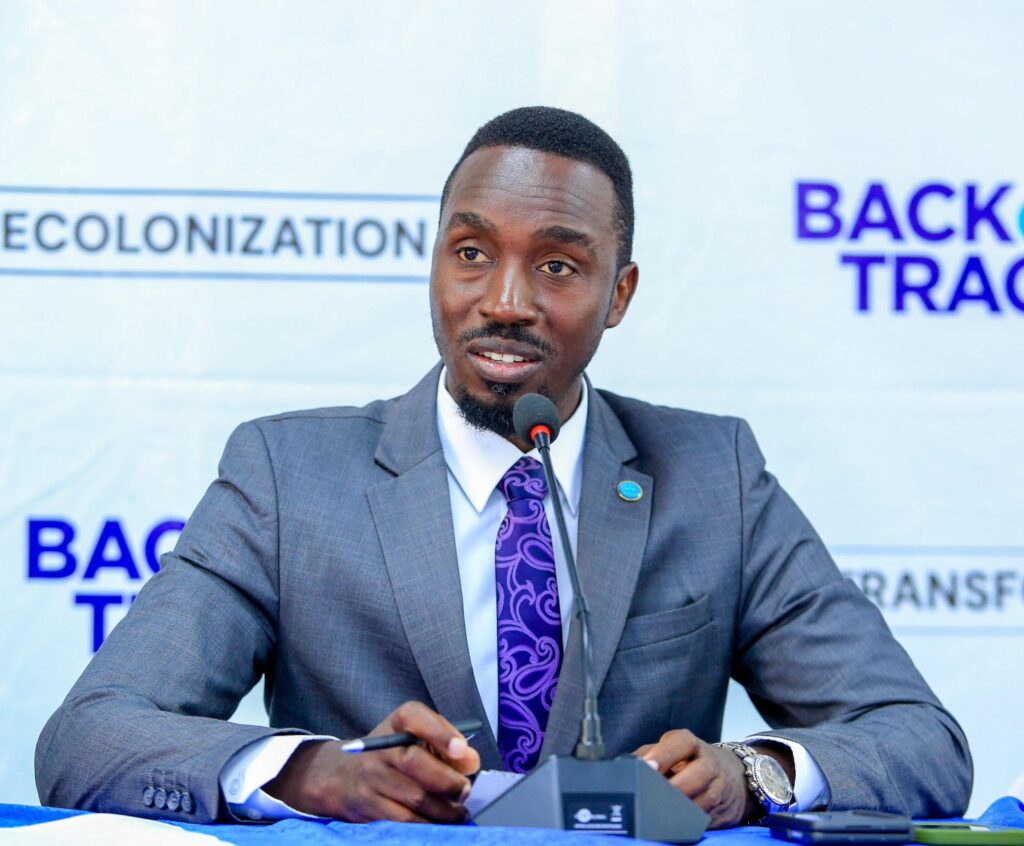
By Asiimwe Anthony
KAMPALA UGANDA: 20 APRIL 2026-
Since 6AM today, my phone has been inundated with calls from the Bar, the public, and the press. They are furious at the 923-word article by Enoch Barata in New Vision of 20 April 2026 defending the so-called Sovereignty Bill. They demand a scorching rebuttal. Enoch Barata is not just a lawyer. He is the Director of Legal Services of the National Resistance Movement.
This is my rebuttal, as Vice President of the Uganda Law Society:
The NRM Legal Director’s defence of the so-called National Sovereignty Bill (in reality the Anti-Sovereignty Bill) presents a familiar script: “the world is changing, foreign interference is real, Uganda must adapt.” But beneath the polished references to elitist acronyms such as FARA, FICA and the global trends he cites, lies a simple constitutional truth that the article conveniently ignores: Sovereignty in Uganda belongs to the people, not the Government.
But who are the people? The people are the voters from whom NRM hid this Bill during the recent elections. The people are the millions of voters who will not get to read Barata’s good English in the government’s 20,000-circulation English language newspaper. The people are the multitudes of rural and urban poor victims of NRM’s 30-year failure to implement Article 4 of the 1995 Constitution: the state obligation to provide every citizen with a translated copy of the Constitution in their local language, plus a permanent programme of civic education.
Article 1 of our Constitution is unambiguous: “All power belongs to the people who shall exercise their sovereignty through their will and consent.” The Bill does not protect this sovereignty. It transfers it to the Executive by letting the Minister and a new secret Department of Peace and Security decide “Government interests” and punish dissent. That is not safeguarding sovereignty — it is overthrowing it.
The referendum requirement is fatal:
Any law that alters the basic structure of the Constitution — especially the location of sovereignty itself — must be approved by the people in a national referendum under Article 260(2). This Bill makes exactly those changes without ever asking Ugandans to vote. It is therefore dead on arrival: unconstitutional, null and void.
No amount of international comparison can cure that defect: The Bill fails every international human-rights litmus test. Even if the procedural flaw were ignored, the substance collapses under established standards: R v Oakes proportionality test (the gold standard for justifying limits on rights).
The Bill’s unverified objective may sound “pressing,” but its means are arbitrary, unfair and irrational. It is not rationally connected to any genuine threat — it sweeps in ordinary criticism, diaspora voices and legitimate NGO work. It fails minimal impairment and proportionality: the harm to free speech, association and political participation grossly outweighs any benefit.
R v Big M Drug Mart principle:
Laws cannot impose a state ideology or chill the free exercise of fundamental rights. This so-called Sovereignty Bill does precisely that by criminalising criticism of Government policy as “economic sabotage” and redefining Ugandans abroad as “foreigners.” UN Human Rights Committee General Comment 34 (Article 19): Restrictions on expression must be precisely drafted, pursue a legitimate aim, and be necessary and proportionate. Vague, overbroad provisions that grant unfettered executive discretion — exactly what this Bill contains — are classic violations. Criticism of Government is the lifeblood of democracy, not a crime.
UN Special Rapporteur Maina Kiai’s reports:
Kiai repeatedly warned that “foreign agents” registration schemes and foreign-funding restrictions are tools to stigmatise, burden and criminalise civil society. They violate the right to freedom of association (ICCPR Article 22) because access to foreign funding is an integral part of that right. He documented how such laws — often sold as “transparency” — are in reality designed to silence independent voices. This Bill follows the exact playbook he condemned.
African Commission on Human and Peoples’ Rights principles:
The Commission’s standards on freedom of expression, association and NGO regulation demand the same; any restriction must be necessary, proportionate and non-discriminatory. Blanket criminalisation and funding cut-offs fail that test. The Director cites the United States, EU, Canada, Australia and Singapore as models. But those laws are narrow, focused on covert political influence by actual foreign principals, and subject to judicial oversight and transparency. They do not criminalise domestic criticism, brand citizens “foreigners,” or starve independent schools, hospitals and media of funds. Uganda’s Bill does all three — and more.
True sovereignty is self-determination by the people:
The Bill before Parliament replaces “power belongs to the people” with “power belongs to Government.” It does not adapt to a changing world; it adapts the Constitution to the fears of those in power. That is not legislation for sovereignty — it is legislation against the sovereign people of Uganda. The very definition of a coup d’état! The Uganda Law Society, through our Radical New Bar Governing Council led by President Isaac K. Ssemakadde, SC, writing from exile this morning, has already said it plainly in our cautionary statement: this Bill is an act of treason against the Constitution (Article 3). It must be rejected outright. The greatest act of patriotism today is to defend the 1995 Constitution from those who no longer respect it.
The author is the Vice President, Uganda Law Society.