
KAMPALA, UGANDA: 04 January 2026–
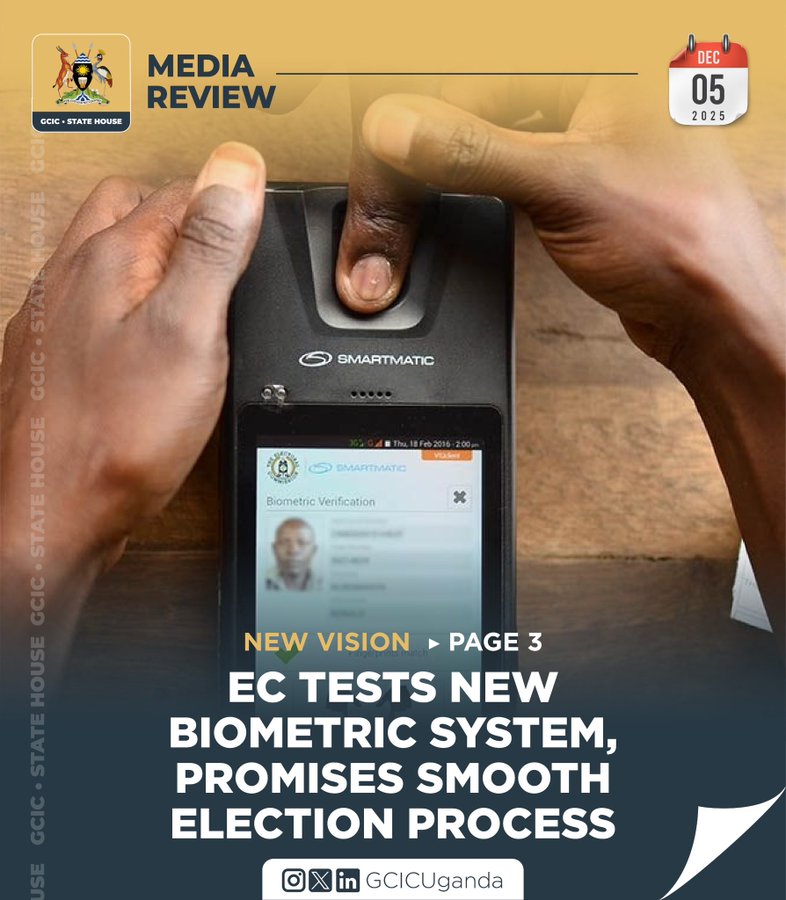
The Electoral Commission (EC) yesterday tested the recently procured biometric voter verification machines that will authenticate voters during the 2026 general election.
The kits with enhanced features will help voters locate their polling stations, eliminate long queues, identify the right voters as well as provide faster and transparent voter information as recorded in the national voters’ register.
How the machines will support electoral integrity:
The EC’s strategy involves deploying 109,142 machines across 50,739 polling stations nationwide. To ensure efficiency, each polling station will be equipped with two kits operated by a single trained officer.
Key Features of the New System:
The revamped system is designed to streamline the voting process through several technical upgrades including Faster Authentication: The verification process is estimated to take approximately one minute per voter.
Ballot Integrity: For the first time, operators will scan QR codes on ballot paper booklets, allowing the machine to recognize and validate the specific categories being voted on at that station.
Operational Reliability: To prevent downtime, every station will have dedicated power banks to support the machines throughout the polling day.
Dual-Layer Verification: The machines scan National IDs or Voter Location Slips (VLS) and confirm identity using either fingerprints or facial recognition.
Despite the EC’s assurances of a “smooth election process”, the rollout has faced scrutiny. During a mock demonstration in January 2026, officials confirmed that if a biometric match fails, the machine’s automated voice will remain silent or indicate a failure, requiring manual intervention.
Furthermore, technical glitches during earlier testing phases led EC Chairperson Justice Simon Byabakama to clarify that while biometrics are the primary tool, the physical national voters’ register remains the ultimate legal authority to ensure no citizen is disenfranchised due to machine failure.