
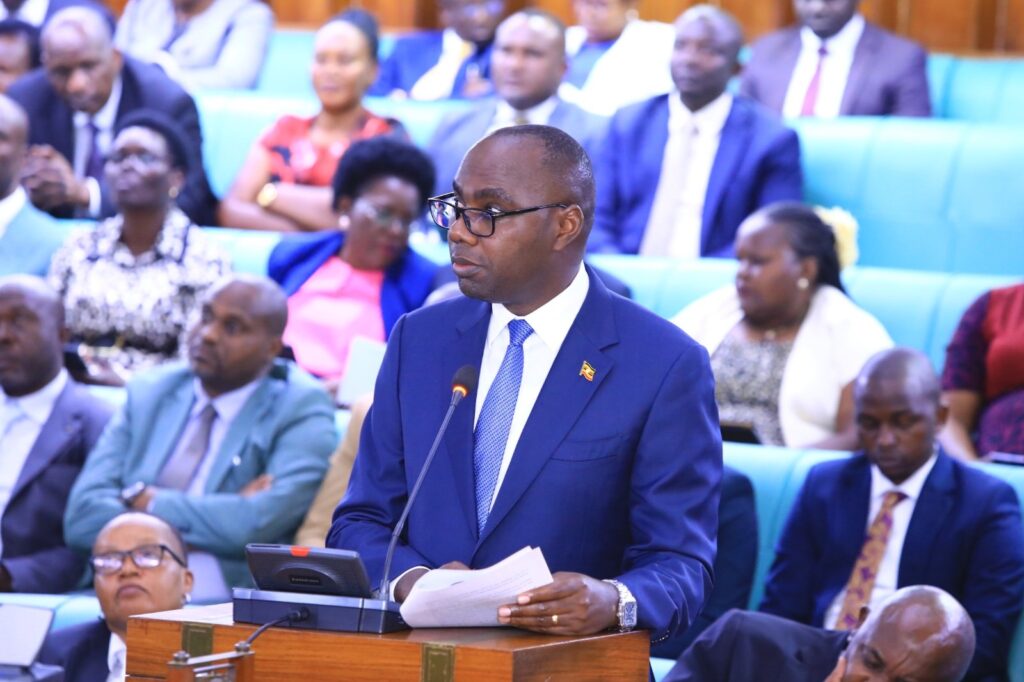
KAMPALA UGANDA: 27 October 2026— Appearing before Parliament on October 27, 2026, Minister of State for Finance, Planning and Economic Development, Henry Musasizi, delivered a ministerial statement addressing the recent sharp depreciation of the Uganda shilling and mounting cost-of-living concerns.
Despite growing financial strains on households and businesses—including an exchange rate that has slipped from around Shs 3,604 in March 2026 to approximately Shs 4,500 per US dollar in late October, and energy inflation surging to 14.5%—Musasizi strongly reassured lawmakers that the underlying fundamentals of the national economy remain robust.
He highlighted that Uganda’s broad-based economic growth accelerated to 6.4% in the 2025/26 financial year (up from 6.3% previously), lifting the size of the economy to Shs 250.4 trillion (approximately US$69.3 billion).
”In conclusion I want to reassure this House and the people of Uganda that, despite the current economic pressures, the fundamentals of our economy remain strong,” Musasizi told Parliament.
To combat current external pressures—such as rising international petroleum costs, tightening global financial conditions, and declining global prices for key agricultural exports like coffee and cocoa—the government and the Bank of Uganda are deploying a coordinated response. Key actions include:
Monetary Tightening: Raising the Central Bank Rate (CBR) from 9.75% to 12% and increasing commercial banks’ cash reserve requirement from 11% to 13.5% to curb excessive demand and anchor inflation.
Fiscal Discipline: Restricting first-half FY2026/27 expenditure releases to 45.6% of the approved budget while prioritizing critical growth sectors like agro-industrialisation, tourism, and mineral development.
Energy Security: Partnering with the Uganda National Oil Company (UNOC) to implement centralized bulk fuel importation and strategic storage initiatives rather than resorting to distortionary price controls or unsustainable subsidies.
Addressing the temptation of heavy state intervention, the Minister noted:
”Drawing on our experience in previous periods of high international oil prices, Government will avoid counterproductive and fiscally unsustainable interventions, such as price controls, which can discourage supply, create fuel shortages and ultimately exert further upward pressure on prices.”
In concluding his address, Minister Musasizi appealed for public calm, urging citizens and businesses to avoid panic-driven foreign currency speculation, prioritize local manufacturing, and exercise financial discipline as the country navigates short-term external shocks.
”What we can commit to is disciplined policymaking, timely and transparent communication, and decisions guided by evidence and the prevailing economic conditions.”
“I want to reassure this House and the people of Uganda that, despite the current economic pressures, the fundamentals of our economy remain strong,” Finance Minister said, adding that Uganda’s economy continues to grow, supported by increased production, investment and exports.