
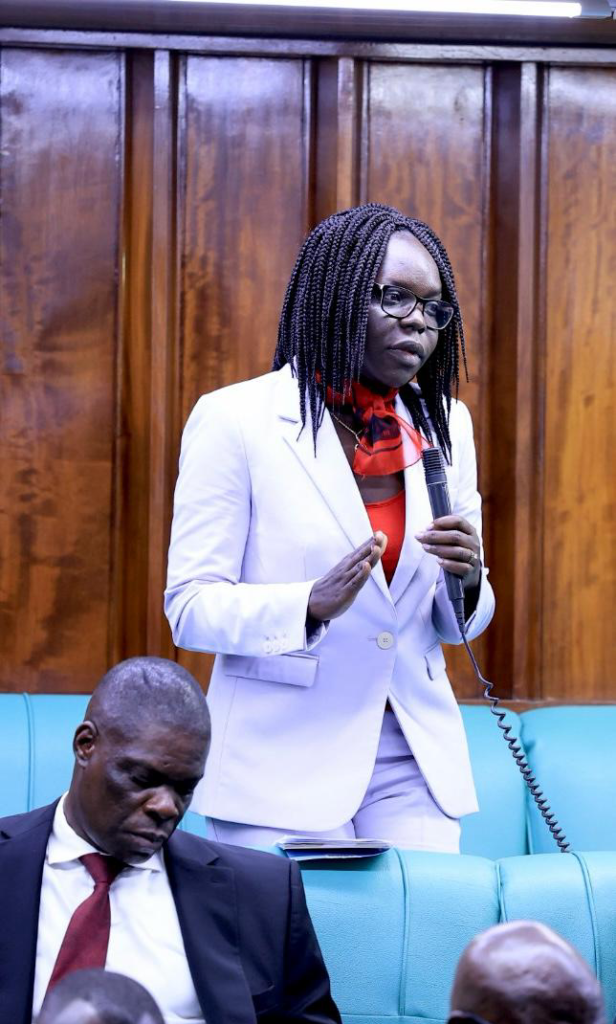
KAMPALA UGANDA: 18 August 2026— Members of Parliament have pressed the Government to urgently revitalize Uganda’s cotton and textile value chain, identifying the rehabilitation and re-opening of the historic Lira Spinning Mill as the single most critical intervention to lift Northern and Eastern Uganda out of poverty.
The call was contained in a motion moved by Dr. Eunice Otuko Apio (MP, Oyam County North), and seconded by Hon. James Kakooza (MP, Older Persons – Central), Hon. Alfred Edakasi Elaru-Olare (MP, Kaberamaido County), Hon. Ayela Omodi (MP, Lira City East), and Hon. Obiga Rose (Woman MP, Terego).
Moved under Rules 58 and 59(1) of the Rules of Procedure of the Parliament of Uganda, the motion urges the State to recapitalize and operationalize the defunct mill as a Strategic National Industrial Enterprise to promote value addition, create jobs, and foster equitable economic growth.
Addressing Deep Regional Disparities
Mover of the motion, Dr. Apio, highlighted the urgent socio-economic imperative of the project, anchoring her argument on Constitutional Directive Principles that mandate the State to ensure balanced development across regions and guarantee economic justice for all citizens.
Citing the Uganda Bureau of Statistics (UBOS) Multidimensional Poverty Index (MPI) Report from March 2026, lawmakers expressed grave concern over severe regional wealth imbalances. While Buganda’s poverty rate stands at 18%, sub-regions in Northern and Eastern Uganda suffer disproportionately—Lango stands at 25%, Acholi at 33.2%, and West Nile at 39%.
Structural unemployment and the absence of agro-processing infrastructure were singled out as primary drivers of these disparities. In Lango alone, over 78% of the working population remains locked in subsistence agriculture, while 44% of youth aged 15–24 fall under the Not in Employment, Education, or Training (NEET) category.
Lawmakers noted that a fully functional Lira Spinning Mill could immediately absorb an estimated 70,000 unemployed or underutilized youth and women across Lira City and neighboring districts.
A Historic Industrial Giant Left Silent
Established as a strategic national asset, the Lira Spinning Mill was once the economic heartbeat of the Lango sub-region. It was designed to consume domestically grown cotton, supply raw textiles to local factories, provide thousands of steady jobs, and anchor the regional cash economy.
However, following its closure over four decades ago, the mill left the region reliant on raw, low-value cotton exports. Re-opening the factory aligns with the Fourth National Development Plan (NDPIV 2025/26–2029/30), which places agro-industrialization and domestic manufacturing at the core of its strategy to boost household incomes and achieve full monetization of the economy.
The move also underpins the Buy Uganda, Build Uganda (BUBU) framework, providing local processing capacity to support the newly enacted External Trade (Amendment) Act, 2026, which slapped a 30% Environmental Levy on second-hand clothing imports to protect domestic industrial production.
Key Parliamentary Prayer & Resolutions
To restore the cotton value chain, Parliament’s resolution asks the Government to implement a seven-point operational roadmap:
Comprehensive Assessment: Conduct a technical, financial, legal, and commercial audit of Lira Spinning Mill to determine its structural integrity and ideal public-private or state-led business model.
$58 Million Investment Mobilization: Partner with the Uganda Development Corporation (UDC) or utilize Public-Private Partnerships (PPPs) to raise the estimated $58 million required by the Uganda Investment Authority (UIA) to establish a modern, integrated spinning facility.
Revive Farmer Cooperatives: Re-energize cotton production across Lango and nearby farming zones by supplying farmers with high-quality seeds, extension services, subsidized inputs, and cooperative support to secure a steady supply of raw materials.
Enforce BUBU Directives: Direct security agencies and public institutions—including the UPDF, Uganda Police, Uganda Prisons Service, and public schools—to source all uniform and textile requirements domestically from the revived mill.
Youth and Women Empowerment: Direct the facility to prioritize women and youth in job placement, technical training, and supply chain micro-enterprises.
Six-Month Progress Report: Require the Executive to submit a comprehensive roadmap, financing mechanism, and timeline to Parliament within six months.
Committee Oversight: Mandate the Parliamentary Committee on Tourism, Trade, and Industry to actively oversee the industrial undertaking and track progress of the project.
The motion was later adopted by the House with State Minister for Cooperatives, Hon. Tom Aza promising to bring an action-taken report on the efforts to revitalise cotton milling factories across the country.